


Yesterday, very hot. Today? Predicted 98°, with a 40-degree drop in temp at night. No humidity. I feel my skin drying into an old prune.
If day 3 was photos of the land, this day 4 will be photos of the people. You will notice that this convergence feels seamlessly intergenerational. Especially very young adult, and very old adult. the ’60s hippies meet the young, starry-eyed, grounded creatives on the playing fields of permaculture.
First, John Valenzuela, who fascinated all in attendance under the solar panels with his stories of wild edibles and their seeds.
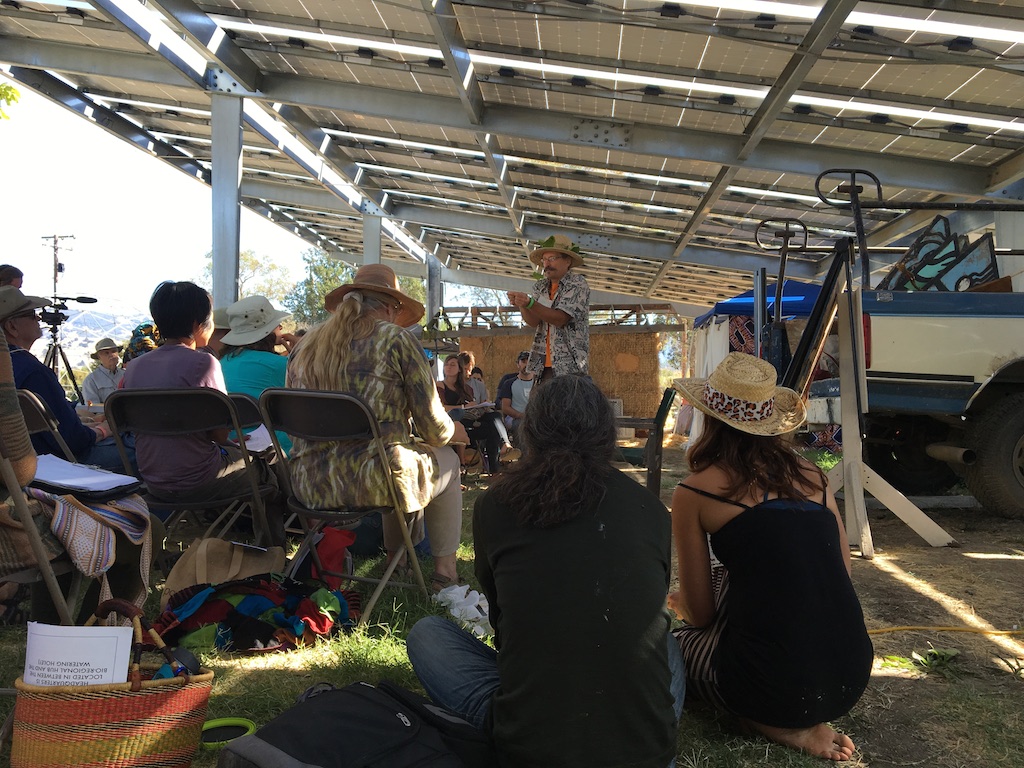
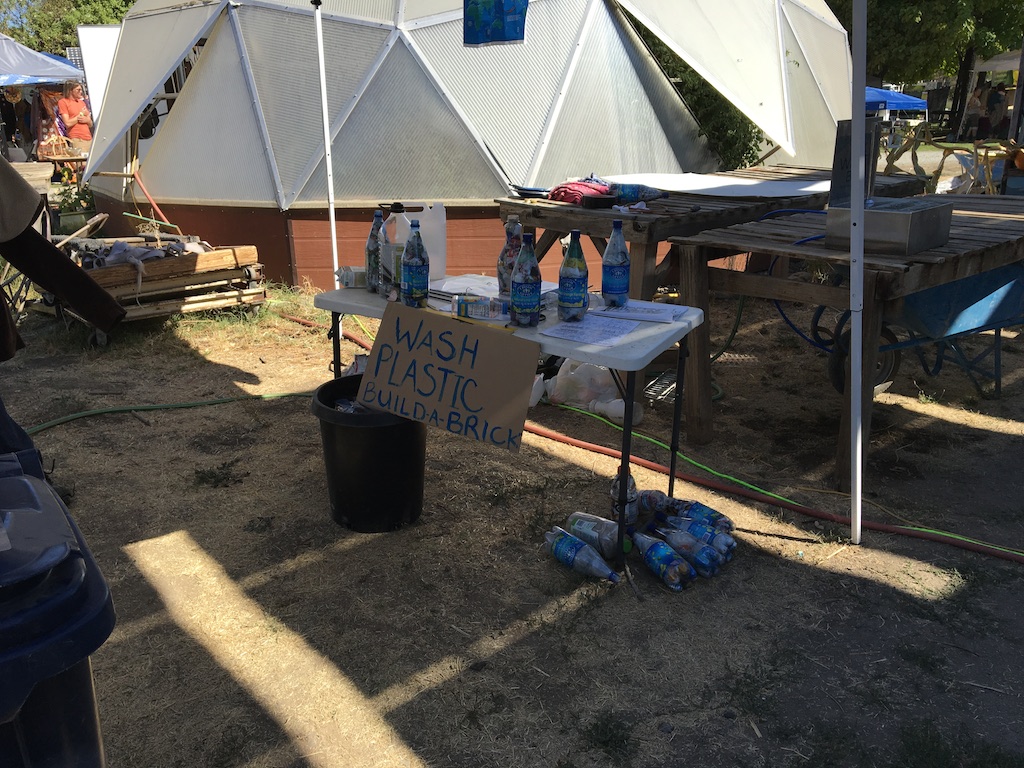
Afterwards, we hung around and looked at what was on the table.
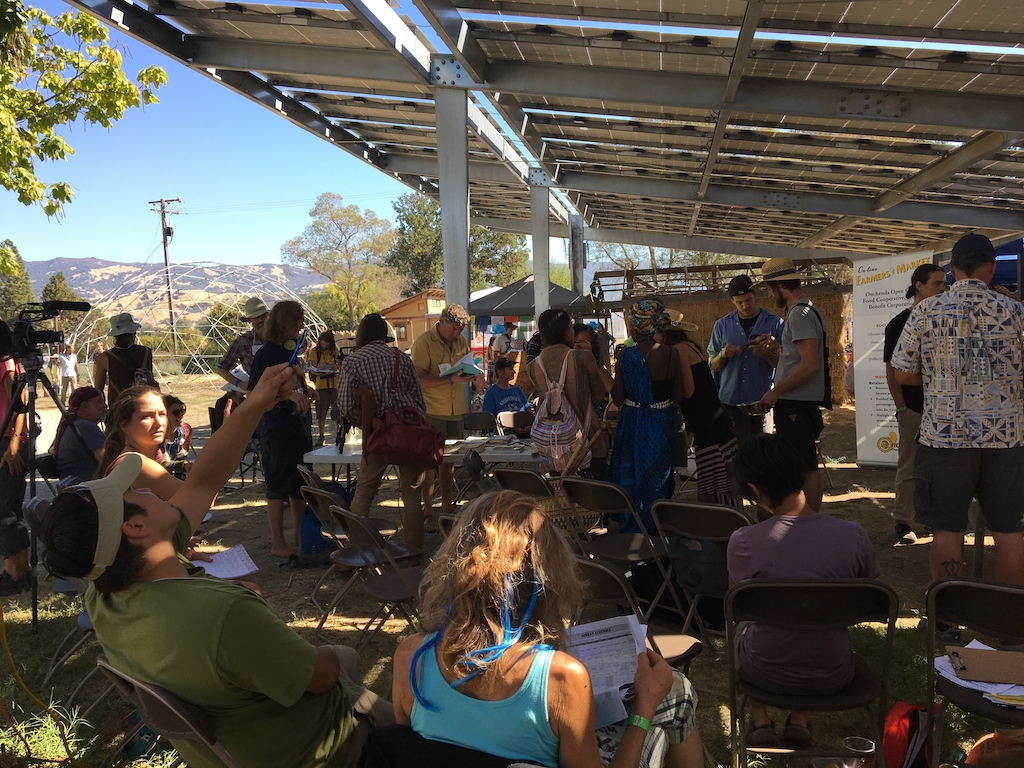 Beautiful young souls . . .
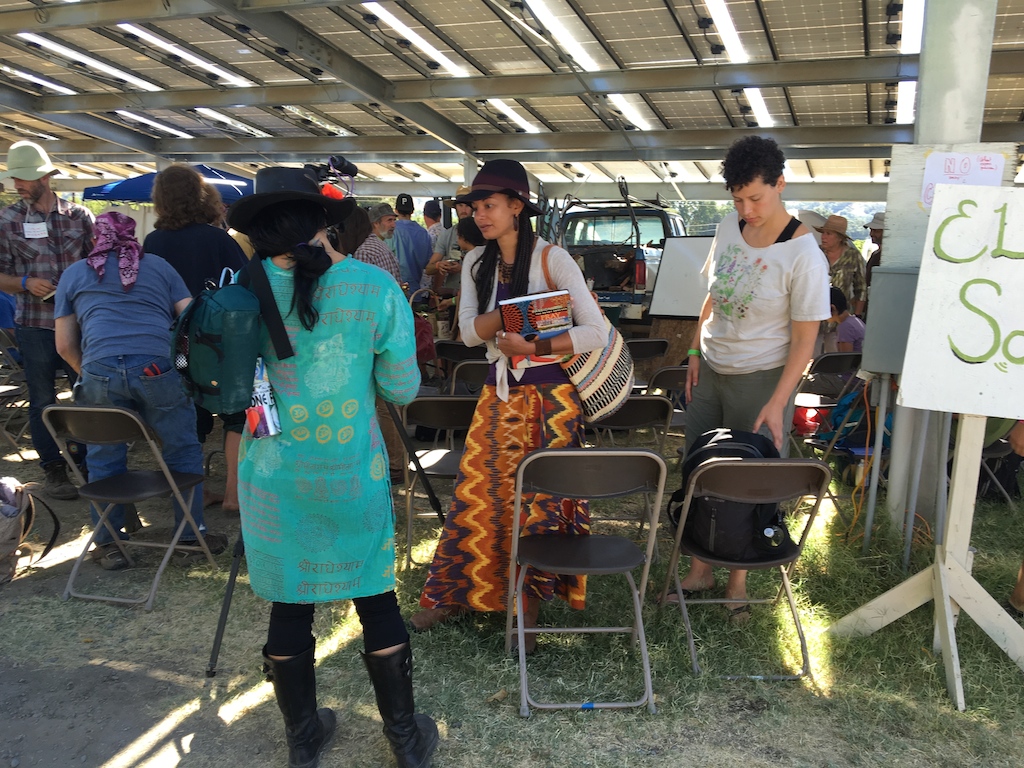
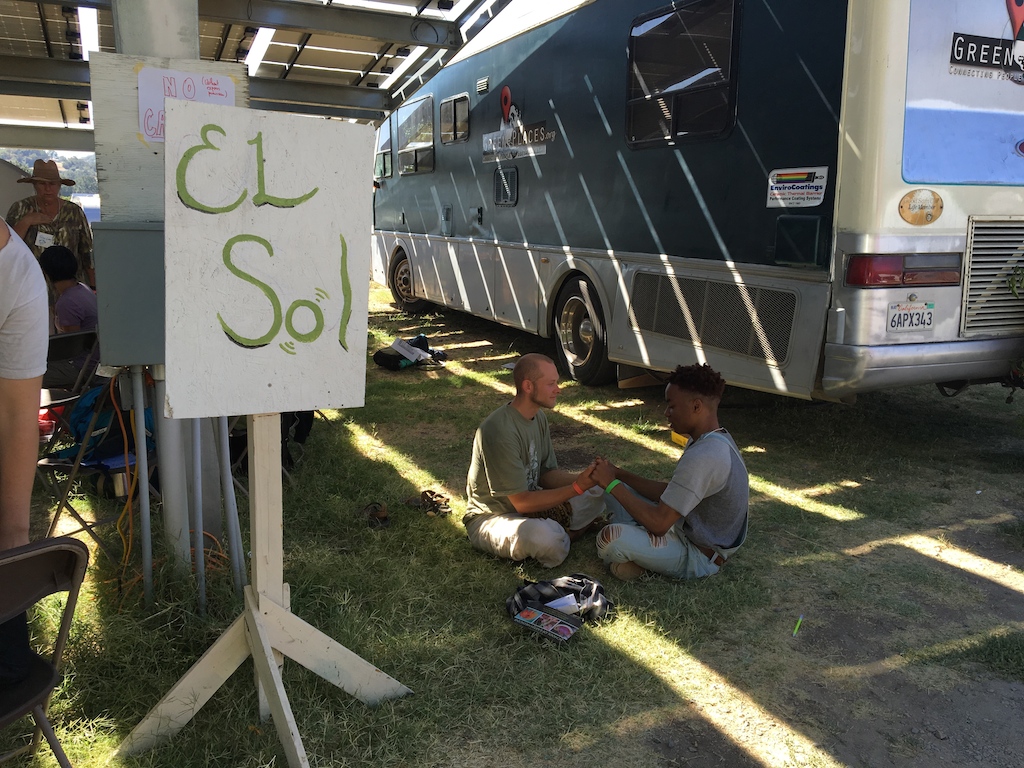
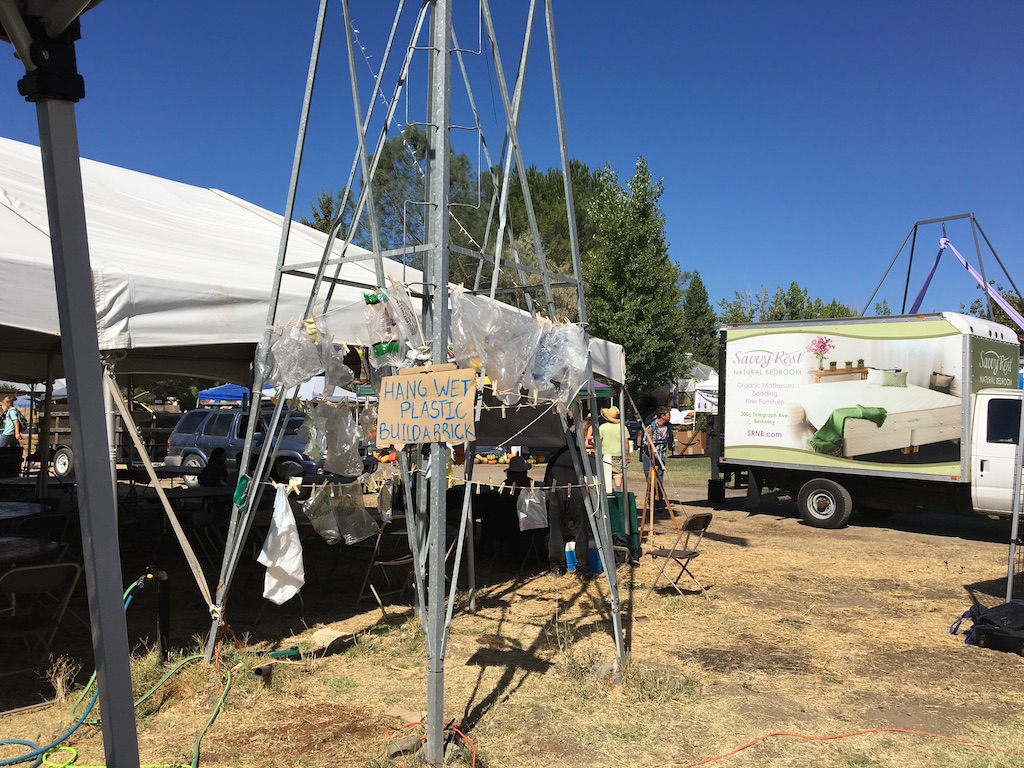
We put paper and plastic “trash” here, to “build a brick,” stuff into bottles, which will be used as fill for a cob bench to be built on Sunday.
Earlier yesterday morning I sat for a heart-to-heart with another woman about my age who is attempting, with her husband, to integrate her adult children (and often, their friends, and for how long?) back onto their land. She is finding it difficult. The problem seems to be deciding what kind of invisible structures are necessary for all of them to feel productive, safe and free. Sound familiar?
During lunch, Starhawk spoke briefly about the value of place-based bioregional identification —
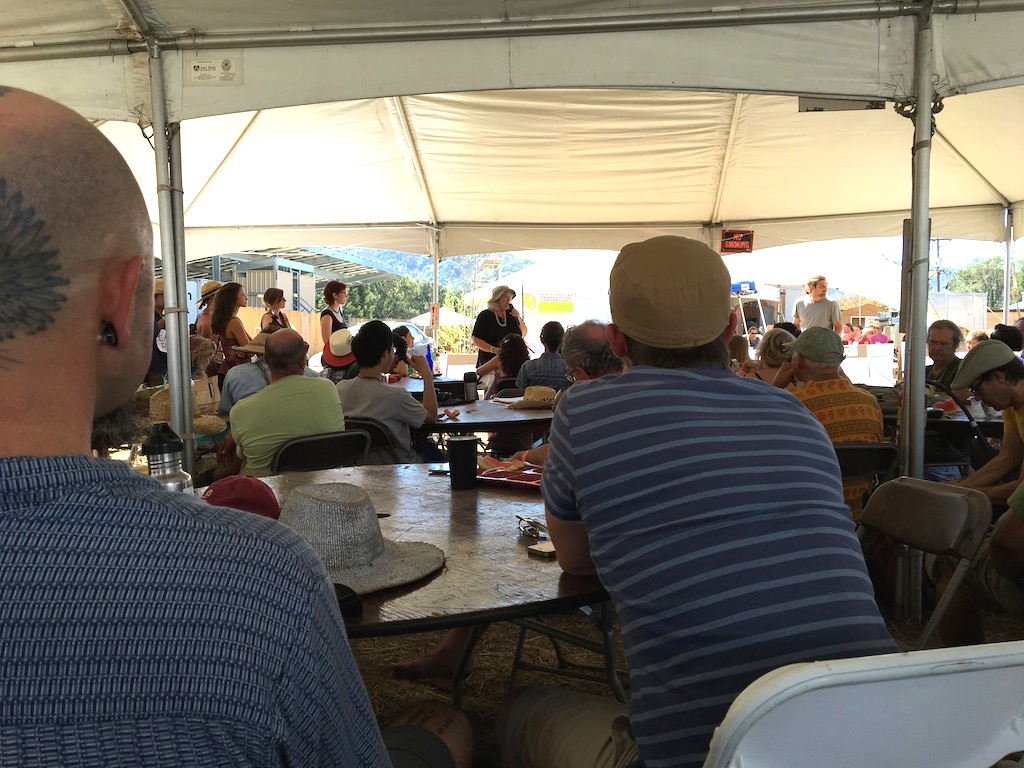
— how the sessions would be organized, including reports from each at the end of the afternoon.
So, after washing dishes —
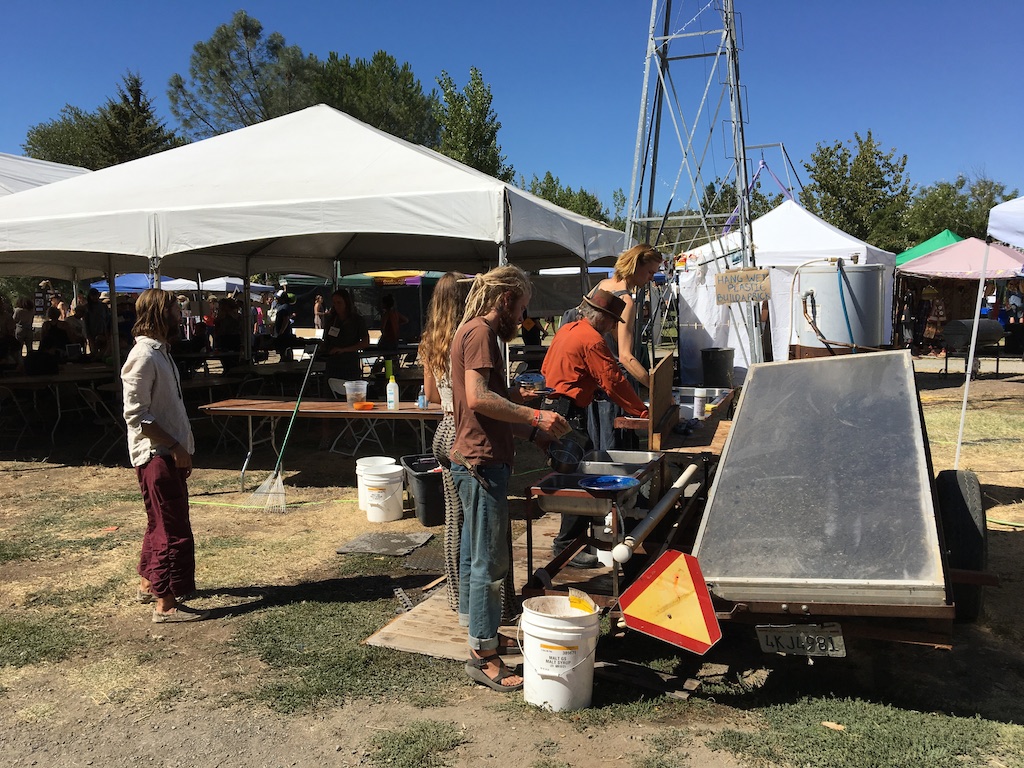
and with a bit of “chaotic” milling around, looking for the person that held the sign that announced our own bioregion —
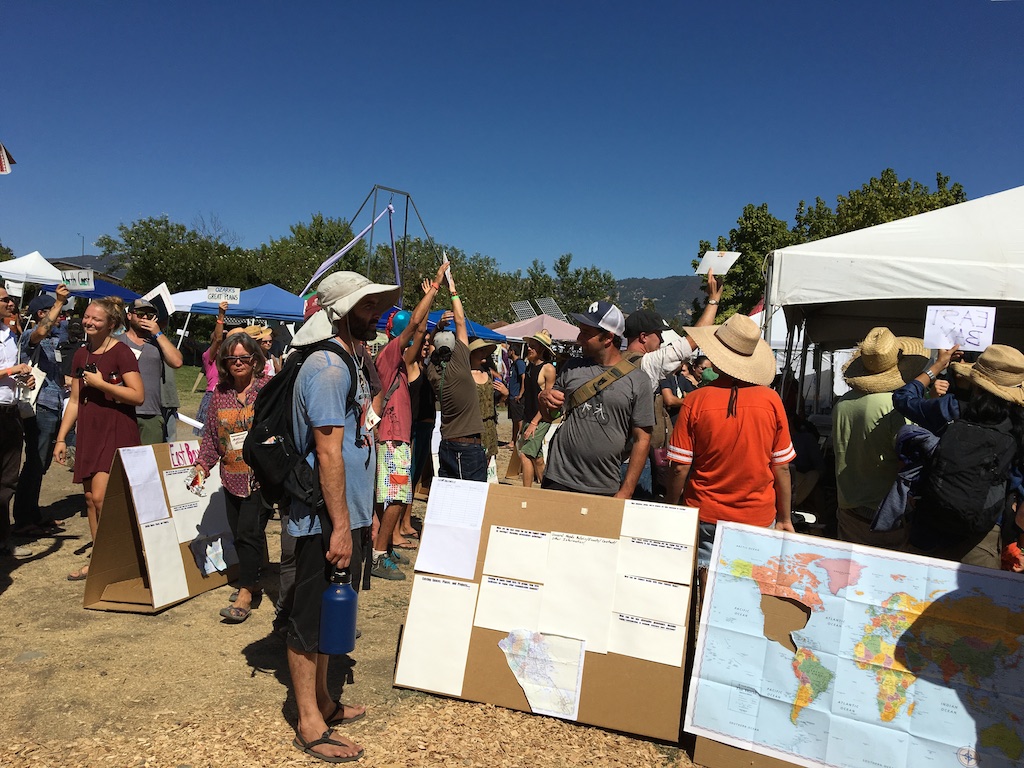
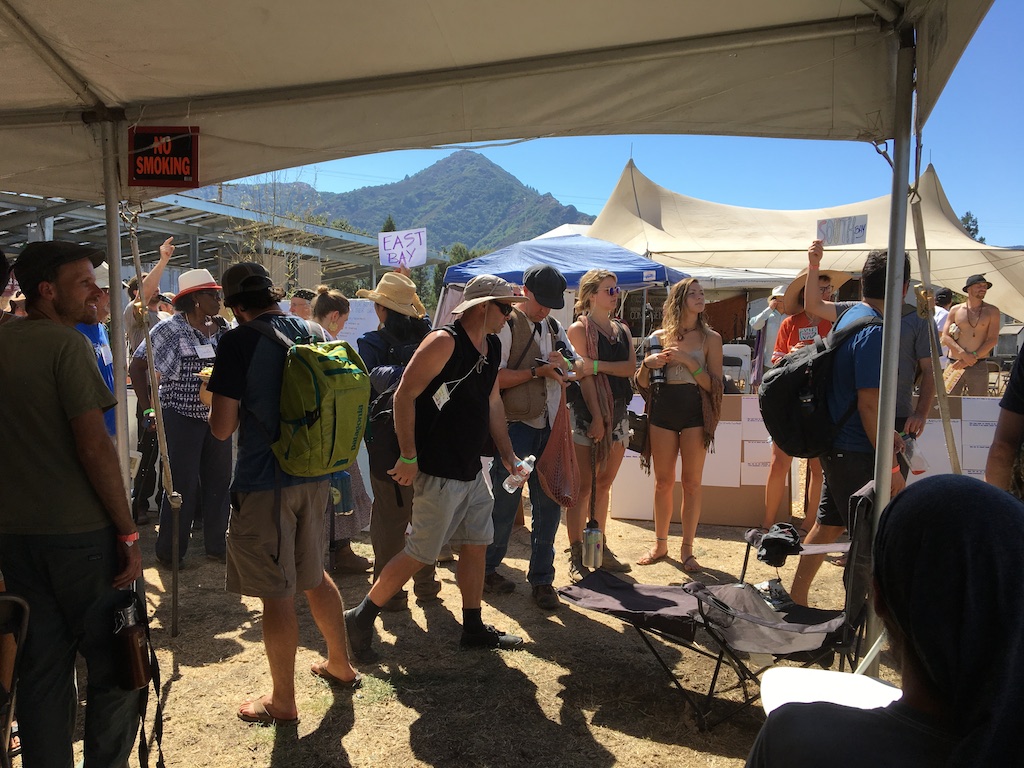
— for me, the “Great Lakes” — we followed our facilitators to the place where we would meet, for two hours, and then reconvened at 4 p.m. in a shady spot on a lawn by the pond for reports. What follows are photos of people standing at the mike, each one talking for one minute, both about the bioregional breakout sessions, and other working group reports.
Notice the mix of young and old. All together now, here to “save the world,” or at least, to save ourselves and the places we stand upon from the isolation and lack of full aliveness experienced in mainstream culture.
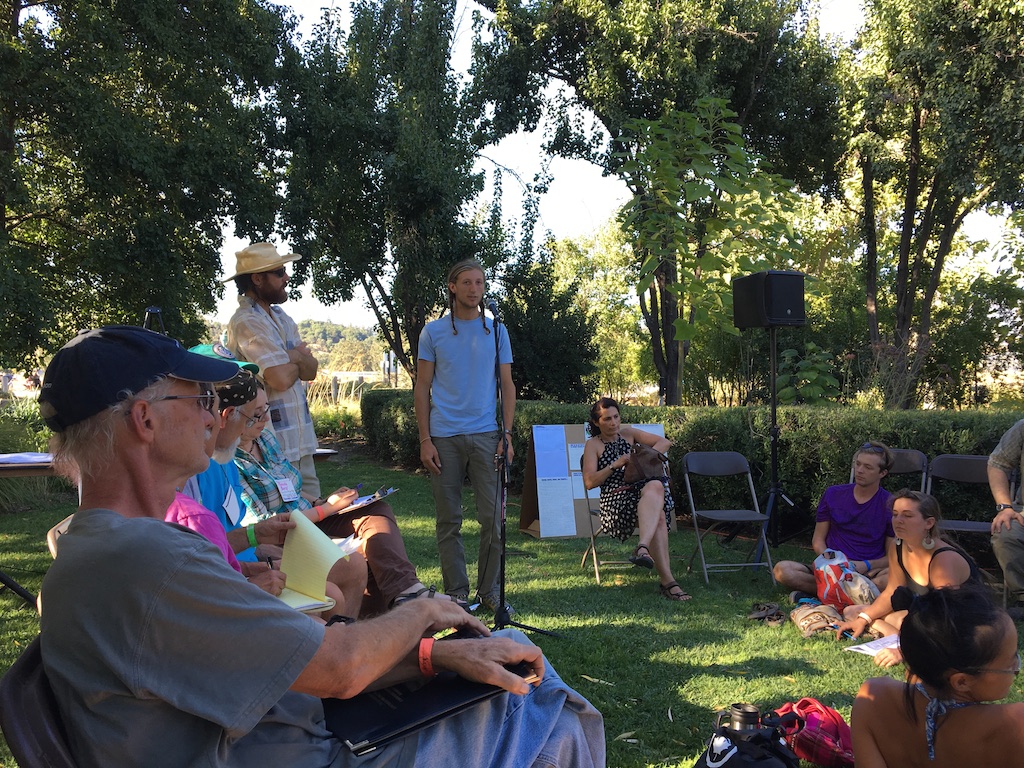
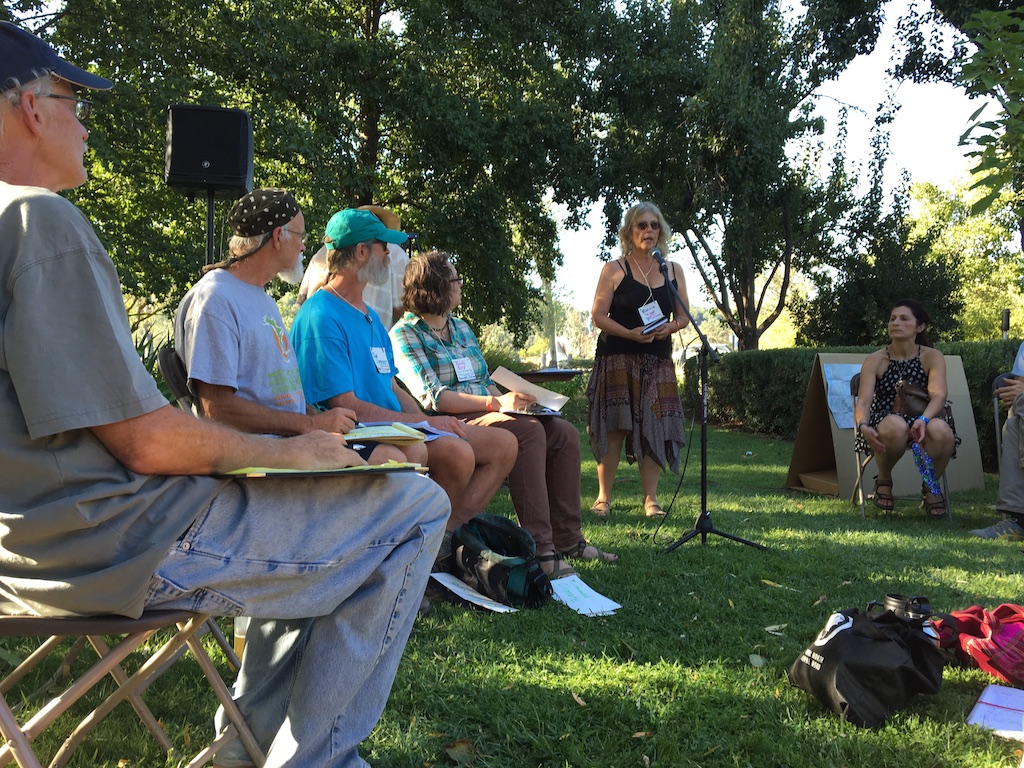
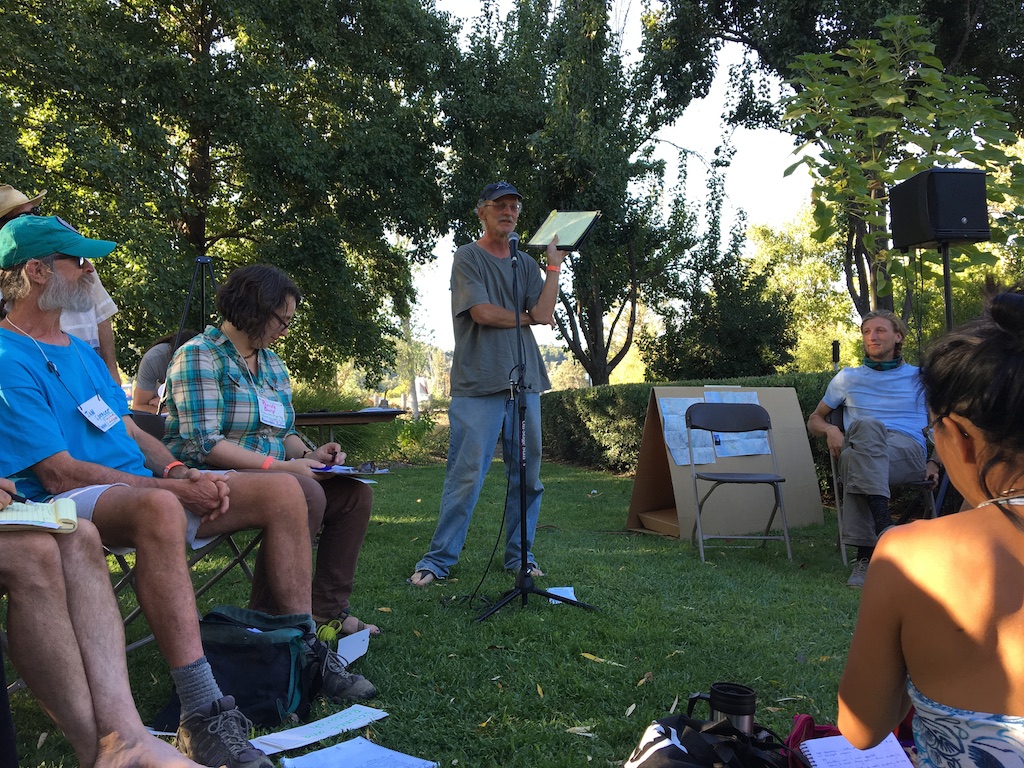
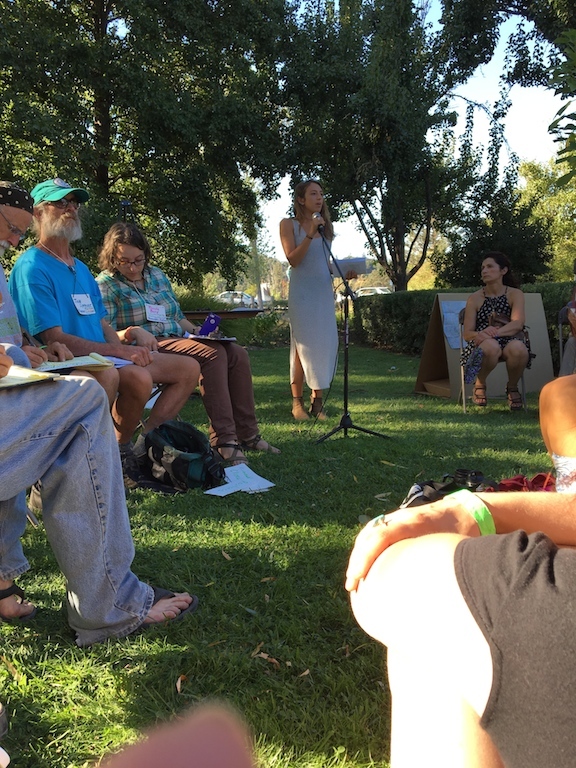
Towards the end, three young woman added a wonderful, call-and-response African song to their short presentation, “Amma-o-e-ay,” — can’t remember what it means.
By the way, there are now three interesting IT platforms in development: 1) newmundo.org, which is mapping permaculture land projects in the U.S.; 2) don’t know the name, but it’s mapping permaculture teachers and courses, state by state in the U.S., and “Xpollinators” — can’t remember what this is for. Google it!
Afterwards, Michael Pilarski circled us up for a hilarious “permaculture” arousal song, with a heart-to-heart ritual beforehand, and lots of hugs afterwards.
That evening, I stayed only for the first speaker, an African, Bayo Akomalofe, who, to me, gave a gentle warning to permaculturists (as he says, he is not one, but he is peering in from the outside) — not to take ourselves too seriously, nor to think that we are the ones who will save the world. Remember, he said, the world is not here passively waiting for us to save her! She is not stable, she is not still, and besides, she is us! We are in her!
“The world is magical . . . We are not in the world so much as we are what the world is doing.”
From an old shaman mentor of his: “To name a color is to blind the eye.” Yes, think about that profound remark, what it means about language.
Furthermore, he said,” We need to notice that permaculture is not an independent practice. It’s not about being inclusive. It’s about being inconclusive.”
Yes. Let us continue to open our minds and hearts to whatever comes next without thinking that we know what we are doing. We don’t. We’re just here, responding with our full selves, just as the rocks and squirrels and clouds are doing. No difference. All being. All love.
 DONATE
Leave a Comment